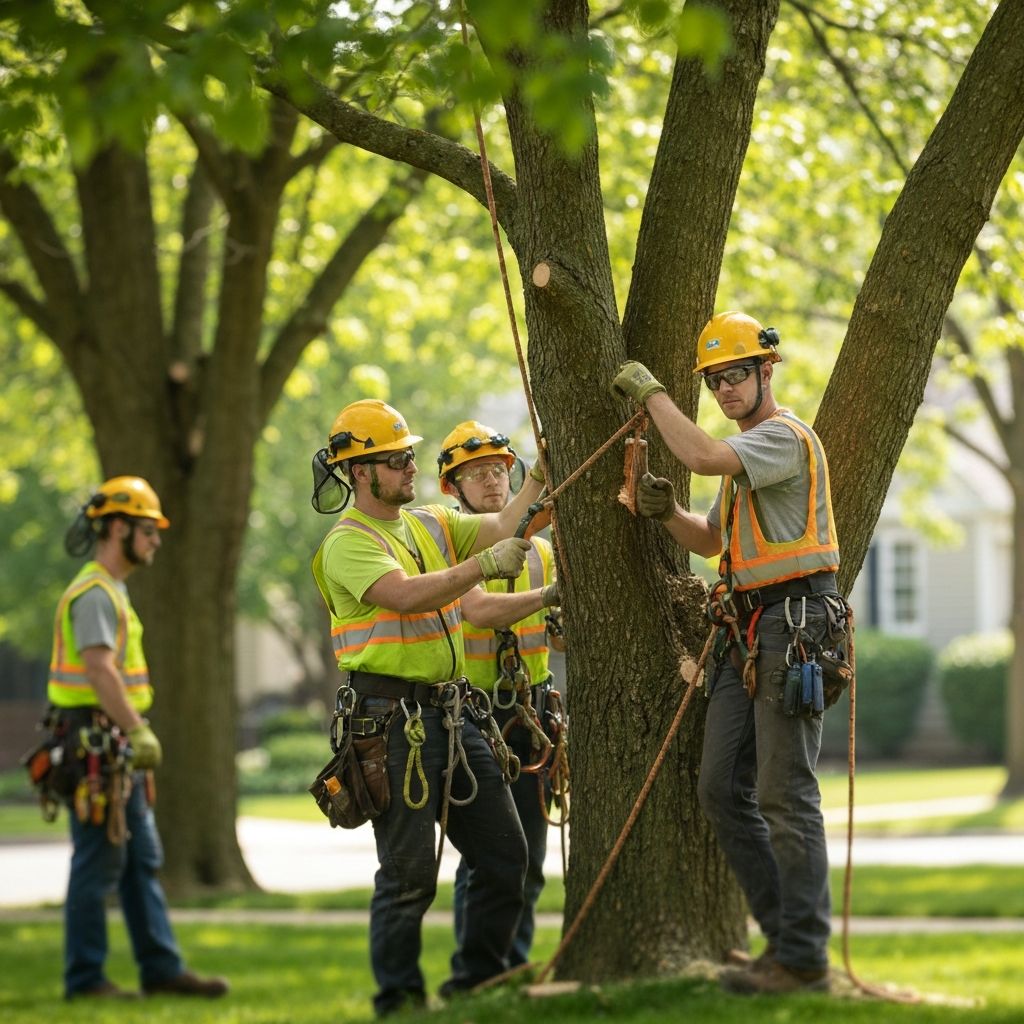
DIY vs Professional Tree Service: When to Call the Experts
We love homeowners who take pride in maintaining their property. But tree work can be dangerous, and knowing when to DIY versus calling professionals can prevent injuries, property damage, and costly mistakes. Here's your guide to making the right call.
Safe DIY Tree Tasks
Tasks You Can Safely Handle:
**Watering Young Trees** - Deep watering during dry periods - Using soaker hoses or tree bags - No special skills or equipment required
**Mulching** - Applying proper mulch layers (2-4 inches) - Keeping mulch away from trunk - Refreshing mulch seasonally
**Minor Pruning** - Removing small branches (under 2 inches diameter) - Deadheading or light shaping of young trees - Cuts you can reach from the ground
**Tree Care Monitoring** - Regular visual inspections - Documenting changes with photos - Identifying potential problems
**Planting Small Trees** - Trees under 6 feet tall - Clear, accessible locations - Following proper planting guidelines
DIY Safety Guidelines:
If you decide to handle minor tree work: - Use proper safety equipment (gloves, safety glasses) - Keep both feet on the ground—don't use ladders - Use correct tools designed for the task - Make clean cuts at proper angles - Stop if anything seems unsafe
When to Call Professionals
Call AI Tree Solutions When:
**Working at Height** - Any pruning requiring a ladder - Branches more than 10 feet off the ground - Trees taller than your house - Hanging or broken branches overhead
**Working Near Power Lines** - Trees or branches within 10 feet of electrical lines - Any possibility of contact with utilities - Even "dead" power lines are life-threatening
**Large Branch Removal** - Branches over 3-4 inches diameter - Limbs that could damage property when falling - Branches with complex rigging needs
**Tree Removal of Any Size** - Even small tree removals require expertise - Unpredictable falling patterns - Risk of property damage - Stump removal requiring specialized equipment
**Storm Damage** - Fallen trees on structures - Hanging branches under tension - Split or partially failed trees - Emergency situations
**Tree Health Issues** - Disease diagnosis and treatment - Pest infestation identification - Structural assessment - Trees showing signs of decline
**Complex Pruning** - Structural pruning for tree health - Large-scale pruning projects - Species-specific pruning requirements - Restoration of storm-damaged trees
The Hidden Dangers of DIY Tree Work
Equipment Hazards Professional-grade equipment is expensive and dangerous: - Chainsaws cause thousands of ER visits annually - Improper use leads to severe injuries - Equipment maintenance is critical for safety - Protective gear is essential
Fall Risks Working at height is inherently dangerous: - Ladder accidents are common - Unstable footing in trees - No fall protection systems - Emergency response not readily available
Falling Branch Hazards Branches don't fall predictably: - Weight distribution shifts during cuts - Branches can "barber chair" (split unpredictably) - Nearby branches may fall when one is removed - Kickback can cause serious injury
Electrical Hazards Power lines are deadly: - Electricity can arc up to 10 feet - Trees conduct electricity when wet - No visual way to tell if lines are live - Even brief contact can be fatal
Property Damage Risks Without expertise: - Trees or branches can fall unpredictably - Damage to roofs, vehicles, landscaping - Underground utility strikes - Damage exceeds cost of professional service
The True Cost of DIY Tree Work
Direct Costs: - Equipment purchase or rental - Safety gear - First aid or emergency care for injuries - Property repairs from mistakes - Time investment
Hidden Costs: - Emergency room visits - Lost work time from injuries - Incorrect cuts that harm tree health - Structural damage from improper work - Liability if someone else is injured - Homeowner's insurance deductible for property damage
Professional tree service is often cheaper than the cumulative DIY risks.
What You're Paying Professionals For
When you hire AI Tree Solutions, you get:
**Expertise:** - Years of training and experience - Knowledge of tree biology and behavior - Understanding of species-specific needs - Proper cutting techniques
**Safety:** - Comprehensive insurance coverage - Trained crew members - Professional safety equipment - Established safety protocols
**Equipment:** - Professional-grade chainsaws and tools - Aerial equipment (bucket trucks, cranes) - Rigging systems for controlled lowering - Stump grinders and chippers
**Efficiency:** - Jobs completed in hours instead of days - Proper cleanup included - Professional results - No learning curve on your time
**Peace of Mind:** - No risk to you or your family - Coverage if anything goes wrong - Guaranteed professional results - Emergency response capability
Making the Right Decision
Ask yourself: 1. Can I complete this safely from the ground? 2. Do I have the right tools and safety equipment? 3. What's the worst that could happen? 4. Am I comfortable with those risks? 5. Is potential savings worth the danger?
If you hesitate on any question, call a professional.
The Bottom Line
There's no shame in calling experts—tree work is genuinely dangerous. Professional arborists aren't just more efficient; they're trained to handle hazards you might not anticipate.
We've seen too many homeowner injuries and property damage from well-intentioned DIY projects. Your safety is worth far more than the cost of professional service.
For a free consultation to discuss your tree care needs, contact AI Tree Solutions. We'll provide honest advice about what you can handle yourself and what requires our expertise.