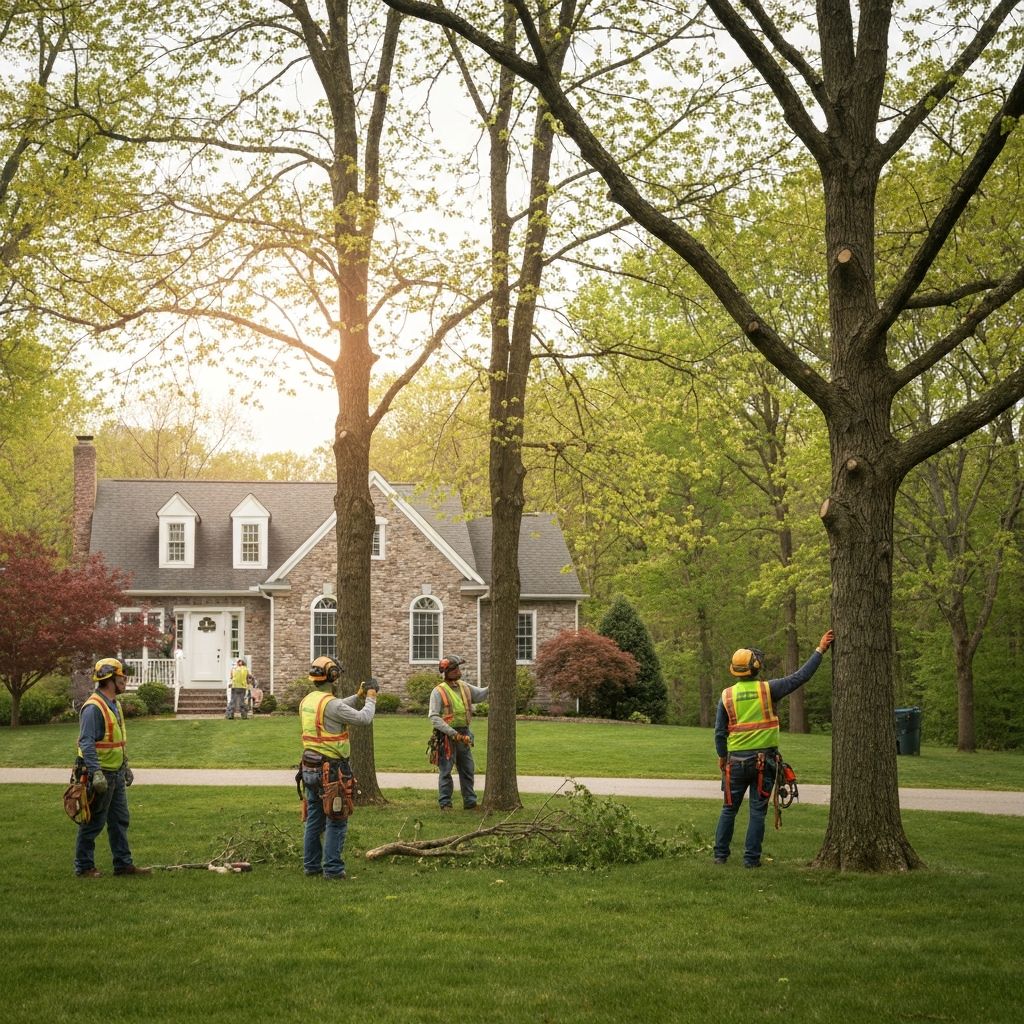
The Complete Guide to Storm Preparation: Protecting Your Trees Before Bad Weather
Connecticut experiences its share of severe weather, from nor'easters to summer thunderstorms. Proper tree preparation can mean the difference between minor cleanup and catastrophic property damage. Here's your comprehensive guide to storm-proofing your trees.
Inspect Before the Storm
Schedule a professional tree assessment before storm season. Certified arborists can identify weak branches, structural problems, and trees at risk of failure.
What We Look For: - Dead or hanging branches ("widow makers") - Cracks or splits in trunks and major limbs - Root problems or soil heaving - Trees leaning toward structures - Codominant stems with weak attachments - Signs of disease or decay
Proactive Pruning
Strategic pruning reduces wind resistance and removes problematic branches before nature does it for you.
Key Pruning Practices: - Remove dead, diseased, or damaged branches - Thin the canopy to allow wind to pass through - Eliminate crossing branches that rub together - Maintain proper clearance from structures and power lines - Address co-dominant leaders that create weak points
Timing matters: Late fall through early spring is ideal for most pruning when trees are dormant.
Cabling and Bracing
For valuable trees with structural weaknesses, cabling and bracing systems provide extra support without requiring removal.
When Cabling Makes Sense: - Trees with historical or sentimental value - Multiple trunks with weak unions - Extended horizontal limbs - Trees recovering from previous storm damage
Know Your Tree Species
Some trees are more storm-resistant than others:
**Storm-Resistant Trees:** - Oak species - Bald Cypress - American Holly - Eastern Red Cedar
**Storm-Vulnerable Trees:** - Bradford Pear - Silver Maple - Willow species - Poplar
Emergency Preparedness
Keep AI Tree Solutions's 24/7 emergency number handy: (203) 941-8899. After a storm, don't attempt to remove fallen trees or hanging branches yourself—call professionals.
Post-Storm Safety: - Assume all downed power lines are live - Don't stand under hanging branches - Don't use chainsaw on fallen trees near power lines - Document damage with photos for insurance - Contact a professional before attempting any cleanup
The Bottom Line
An ounce of prevention is worth a pound of cure. Regular tree maintenance, professional inspections, and proactive pruning dramatically reduce storm damage risk. Contact AI Tree Solutions today to schedule your pre-storm assessment.