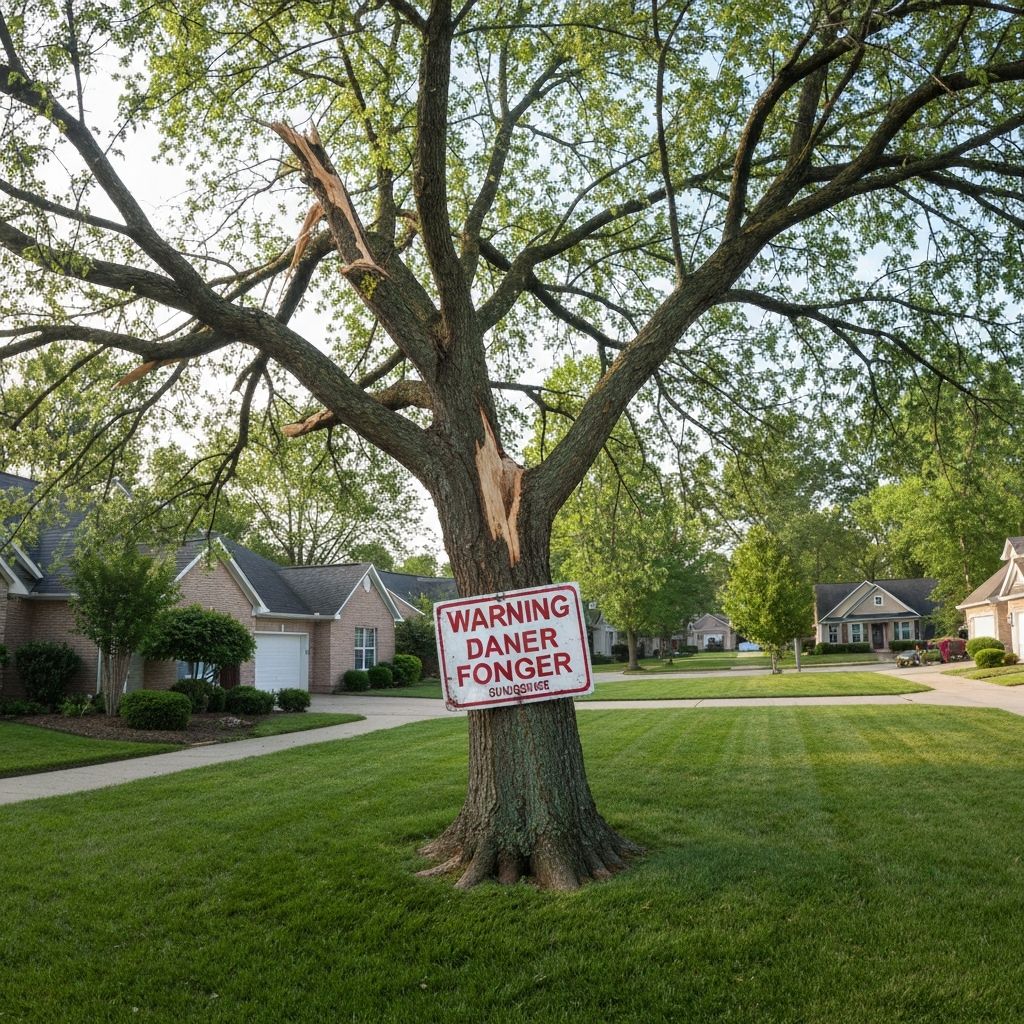
When to Remove a Tree: 7 Warning Signs Every Homeowner Should Know
Trees are valuable assets to any property, providing shade, beauty, and environmental benefits. However, there comes a time when removing a tree becomes necessary for safety and property protection. Here are seven critical warning signs that indicate it's time to call a professional tree service.
1. Severe Structural Damage
Large cracks, splits, or cavities in the trunk can compromise a tree's structural integrity. If more than 50% of the tree is damaged, removal is typically recommended.
2. Dead or Dying Tree
A tree with no living branches, brittle bark that falls off easily, or no leaves during growing season is likely dead. Dead trees become increasingly hazardous as wood deteriorates.
3. Root Problems
Visible root decay, fungal growth at the base, or significant root damage from construction can destabilize a tree. Heaving soil around the trunk is a red flag.
4. Leaning Tree
While some trees naturally grow at an angle, sudden leaning—especially after storms—indicates root failure and imminent falling risk.
5. Disease or Pest Infestation
Some diseases and infestations are treatable, but others like Dutch Elm Disease or Emerald Ash Borer often require removal to prevent spread to nearby trees.
6. Proximity to Structures
Trees that have grown too close to homes, power lines, or other structures may need removal if limbs regularly contact buildings or roots threaten foundations.
7. Storm Damage
Significant storm damage—especially if the main trunk is split or more than 30% of branches are damaged—often means the tree won't recover and poses ongoing risk.
When to Call a Professional
If you notice any of these warning signs, contact a certified arborist for a professional assessment. At AI Tree Solutions, we provide free consultations and can help you make informed decisions about your trees. Don't wait until a hazardous tree becomes an emergency—schedule an inspection today.